
A few days ago, after several months of interrupted communication, I finally received a message from one of my composition students in Iran.
I had been wondering why I had not heard from him.
Then I understood why.
During Persian Sizdah Bedar, the traditional Iranian celebration marking the end of Nowruz, he was outside the city with his family and relatives, in an old garden. Around sixty people were gathered there.
Then the attack took place.
According to his account, the attack was carried out by the United States and Israel. He told me that around 1,000 explosive devices had fallen across the area where families had gathered.
Twenty-one people were injured.
Several members of his family, including his nieces and nephews, suffered serious injuries and fractures.
My student himself was physically unharmed.
Afterward, he sent me a series of messages describing what had happened, together with photographs taken immediately after the incident.
With his permission, I am publishing selected excerpts from our correspondence and some of the photographs he shared with me.
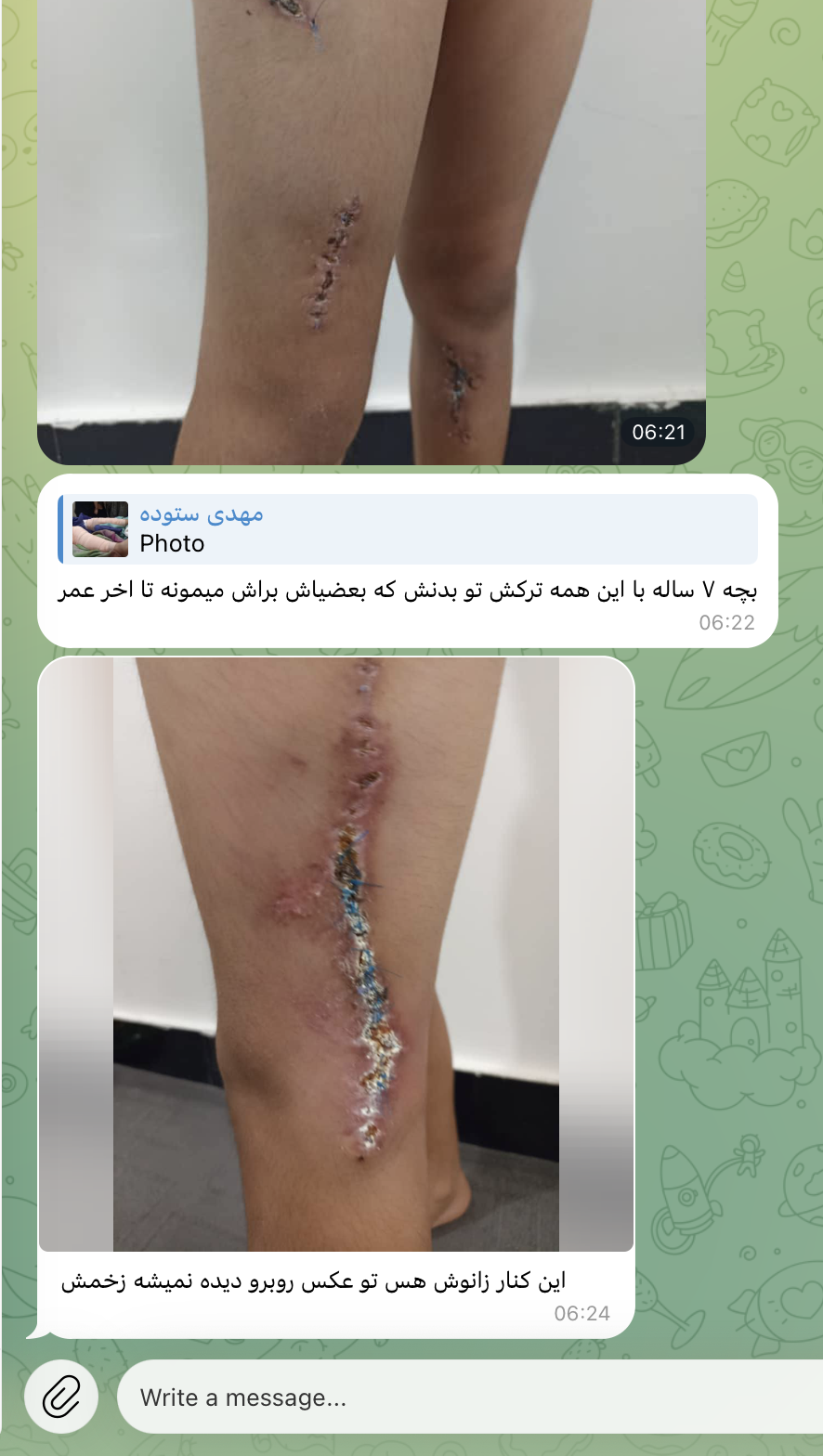
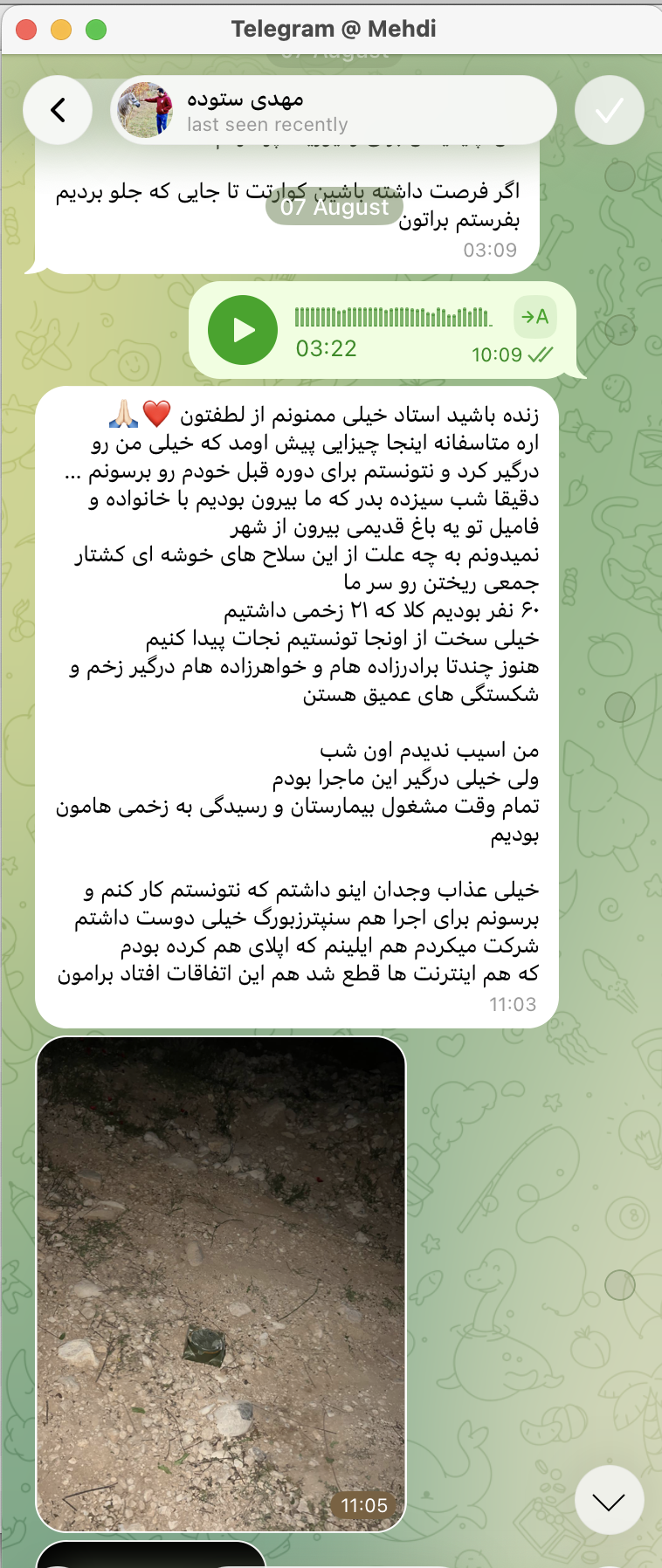
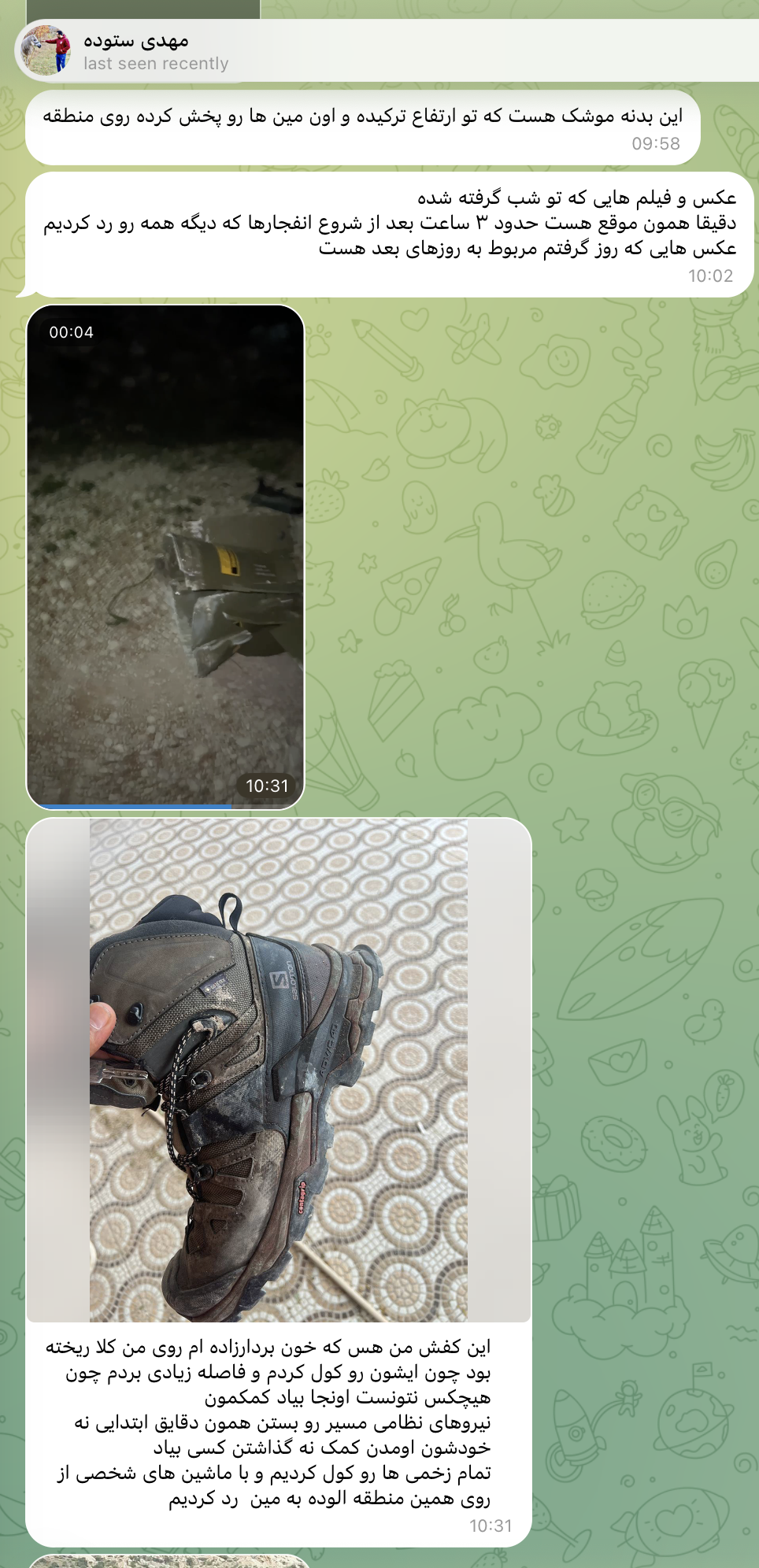
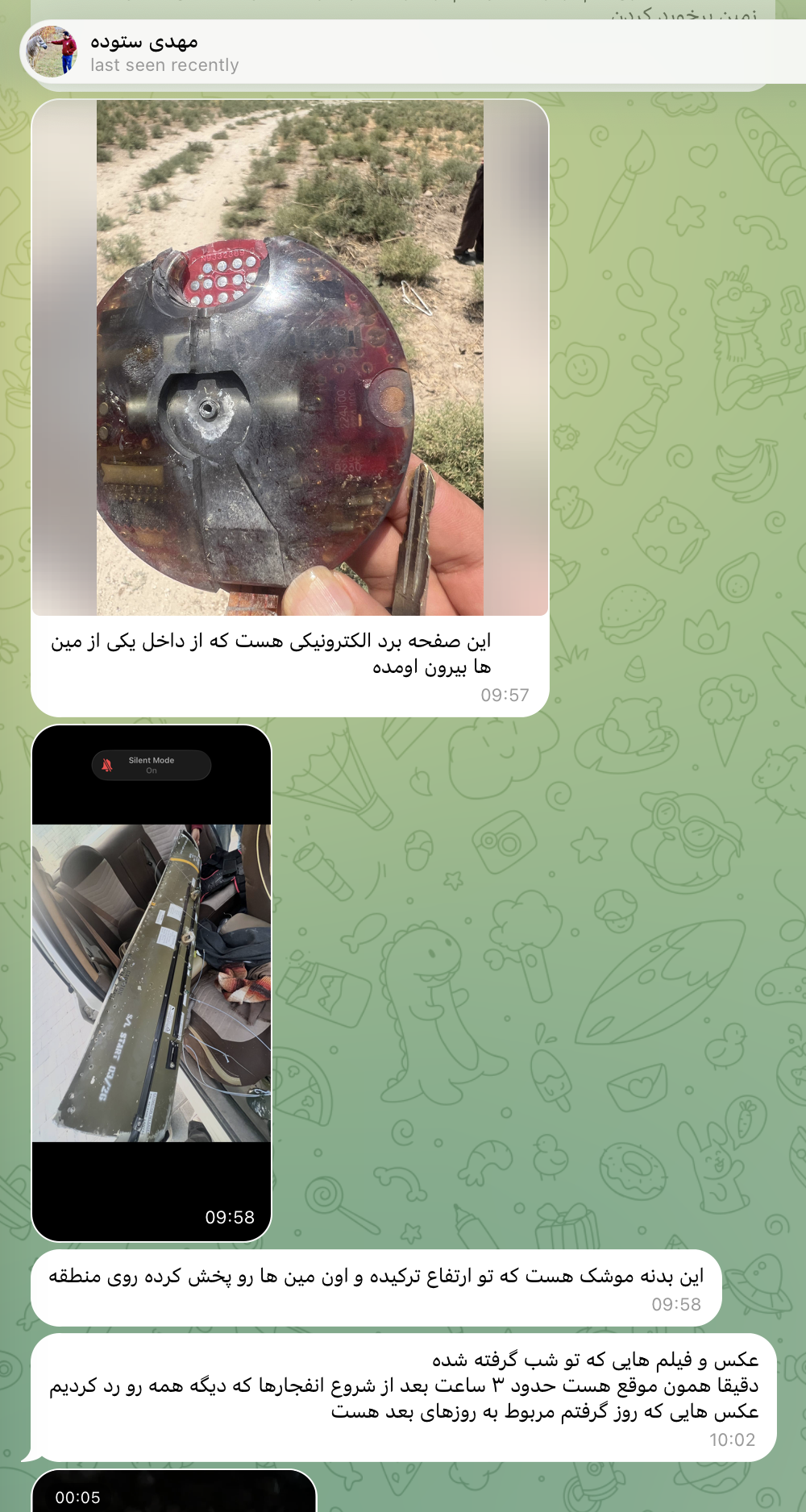
The photographs show the aftermath: the remains of explosive devices, the damaged surroundings, and people who were injured.
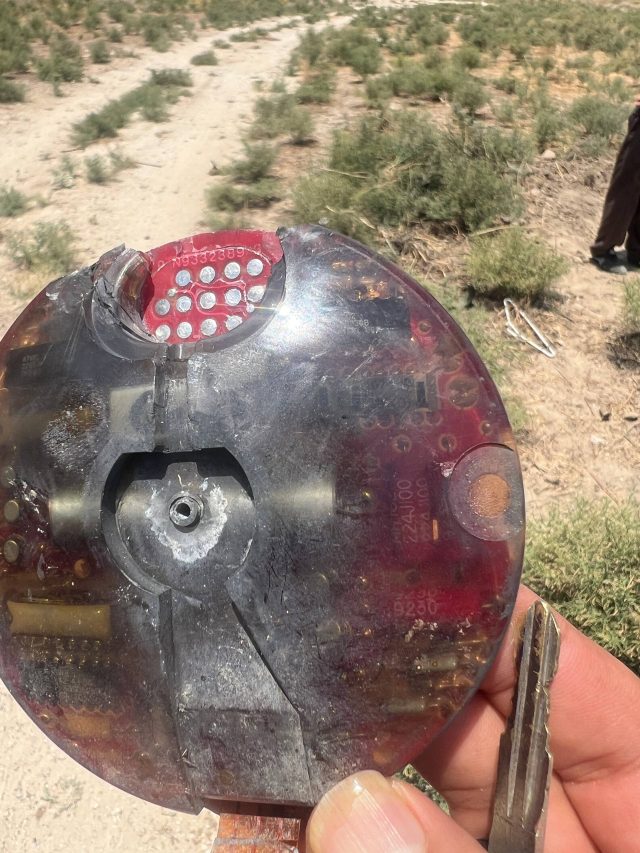
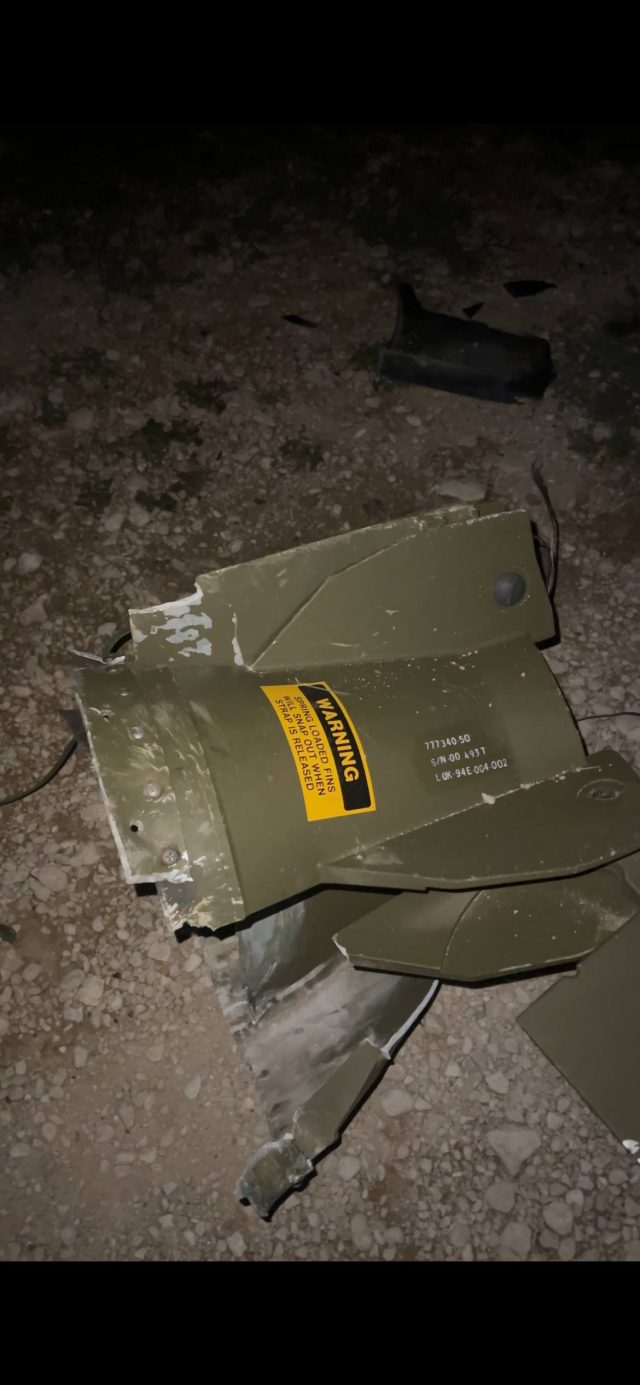
I want to be clear about why I am sharing these images.
An attack that places families and civilians in such danger is not simply another statistic in a military aggression against my country.
The deliberate targeting of civilians is prohibited under international humanitarian law. Attacks must distinguish between civilians and military objectives and comply with the principles of proportionality and precaution. Where those rules are violated, attacks may constitute war crimes.
I am not presenting a legal determination about this particular incident. I am sharing the testimony of my student and the evidence he personally sent me.
But for me, there is also a more immediate human question.
What does war mean for the life of a composer?
My student had been working on his music. He had been preparing to participate in a performance in St. Petersburg. He had applied to an ILINM programme and was hoping to continue developing his work as a composer.
Then there were hospitals.
There were injured family members to care for.
There were interrupted internet connections.
There were difficulties communicating.
And composing had to wait.
He did not stop working because he had lost interest in music.
He stopped because life itself had suddenly demanded something else from him.
This stayed with me.
When we speak about war, we often think about its visible consequences: destroyed buildings, injuries, displacement and interrupted infrastructure.
But there is another kind of destruction that is harder to see.
War can destroy the ordinary conditions that make artistic life possible.
A composer needs time to think.
A student needs to be able to communicate with a teacher.
A score needs to be completed and sent.
A rehearsal needs to happen.
An application needs to be submitted.
A musician needs to be able to travel.
These things may appear insignificant when compared with the scale of war. But together, they form the everyday infrastructure of an artistic life.
When that infrastructure disappears, artistic development can stop almost overnight.
My student’s experience reminded me that behind the silence of a composer there can be a story we simply cannot see.
A missed deadline may have a family emergency behind it.
An unanswered email may have a hospital behind it.
An unfinished composition may have fear, displacement or uncertainty behind it.
And sometimes, as in this case, there are physical wounds behind it.
I am an Iranian composer, and this story concerns people in my own country. But I am also sharing it as a teacher and as someone involved in the international new-music community.
I am not sharing this to turn my professional platform into a discussion of military strategies or geopolitical positions.
I am sharing it because there are human beings behind the headlines.
There are composers in Iran who are studying, writing, experimenting and trying to build connections with colleagues beyond their borders.
They have ideas.
They have ambitions.
They have music they want to write.
But sometimes the most basic conditions required to pursue that work disappear without warning.
For those of us working in the international music community, I believe this matters.
Our responsibility does not end with teaching music or organizing concerts.
Sometimes it means listening.
Sometimes it means remaining connected.
Sometimes it means understanding why a student has suddenly disappeared.
And sometimes it simply means keeping a door open until they are able to return.
I hope my student will be able to return to his music soon.
I hope he will once again be able to sit at his desk, open his score, and think about sound rather than survival.
And I hope that when he is ready to return, the international music community will still be there to listen.
— Mehdi Hosseini
composer
The Symphony of a Civilization: Words on Humanity and Violence